Do you have challenges in the agribusiness industry and agricultural value chain development? In this context, we have to develop and implement new strategies, business models, operational capabilities and practices to respond to emerging trends in agribusiness and agricultural value chains to ensure food security and safety, growth, productivity and sustainability in the agrifood industry in alignment with the 2050’s circular and carbon neutral economy targets. We have to keep in mind that today agriculture occupies nearly 40% of the earth’s surface, crop irrigation accounts for 70% of global water use and agriculture contributes 11% of the global greenhouse gas emissions. For these reasons, we have to focus on the following agribusiness value drivers:
1. RECOVER from the impacts of climate change and challenges of the feeding a growing population, providing a livelihood for farmers, and protecting the environment through implementation of the Farm to Fork and Biodiversity strategies to produce clean, green and safe products.
2. GROW the value and output of agriculture through increased R&D, innovation, NPD, skills investment, diversified product portfolio, funding sources, internationalization and exports.
3. MODERNISE agriculture through innovation, future farming, advanced technologies and Agtech, and future skills.
4. APPLY gender-smart solutions and empower women farmers.
5. PROTECT and enhance the future of agriculture by ensuring it is well-placed to respond to climate change, droughts, pests, weeds, disease and increased resource scarcity.
6. ENSURE conservation of Biodiversity and Ecosystem Services
7. IMPROVE quality, safety and traceability.
8. APPLY long-term marketing and innovation strategy, promote and build confidence in agriculture sector in internationalization.
9. CREATE strategic domestic and international alliances.
10. GENERATE an image of transparency, trust and credibility.
11. APPLY commercialization strategies to facilitate market access for agricultural producers.
12. INTERNATIONALIZE agricultural operations in alignment with the internationally recognized regulations and GMPs, GAPs and other relevant best practices.
How is your experience on these agribusiness value chain drivers? Do you need a consulting support?
Today, food quality and safety is an essential element for growth and internationalization of the agribusiness and food industry. Safe food is essential to human health and well-being.
Unsafe foods are the cause of many foodborne diseases and contribute to other poor health conditions. Let’s look at the facts and figures given by the WHO and FAO:
1. Today, eating contaminated food affects one in ten people worldwide and causes 420 000 deaths every year and this results in the loss of 33 million healthy life years (DALYs);
2. There are more than 200 diseases caused by the contaminated food with bacteria, viruses, parasites, chemical substances and/or naturally produced toxic compounds;
3. Food chain contamination by the antimicrobial resistant microbes causes about 700,000 deaths each year due to the antimicrobial resistant infections;
4. Eleven parasitic diseases cause both acute and chronic health problems in 48.4 million people and 48 percent of this is transferred through food chain;
5. Children under the age of five are at higher risk of malnutrition and death due to unsafe food and carry 40 percent of the foodborne disease burden 125 000 deaths every year. Diarrhea caused one in six deaths in this age group due to unsafe food consumption;
6. Unsafe food causes losses in productivity and medical expenses that are estimated as US$ 110 billion in low- and middle-income countries
We have to keep in mind that unsafe or contaminated food leads to market failures, recalls, trade rejections, economic losses and food loss and waste.
For example, samonella can contaminate your products due to the contamination along your supply chain, in the field and/or your processing lines.

Today, food recalls can be a nightmare for a food manufacturing company. The social media and 24 hour rolling news can crash and damage the customer value. Therefore, it is an ever-growing concern for the food manufacturers. It can cost millions of dollars and untold reputational damage in the market share and customer loyalty.
Now, let’s look at the impact of recalls;
Lost sales;
Direct costs;
Brand damage.
In a survey, consumers indicated that 55% would switch brands temporarily following a recall, and 15% said they would never purchase the recalled product and 21% would avoid purchasing any brand made by the manufacturer of the recalled product.
In this context, food safety management systems and risk preventive measures should be applied to ensure food quality and safety according to the national and/or international standards (Codex Alimentarius, EU Food Law, etc.) along the supply chain from farm to table:
1. Search domestic and global food recalls through consideration of your products and supply chain. Define the root cause and/or make risk intelligence. Establish robust governance by embedding risk management into core processes and creating a risk culture in the organization;
2. Identify, test and calculate the potential risks from farm to fork;
3. Define uncertainties and risks and implement a probabilistic scenario approach and take actions accordingly to prevent failures and recalls;
4. Use right sampling method and period;
5. Regularly test your ingredients, process lines, potential contamination points, bulk products and finished products and be sure that your products are safe;
6. Develop and launch a food quality and safety manual and apply strict measures to prevent physical, chemical and microbiological failures;
7. Work with the right and well-experienced people in your food value chain and create organizational alignment;
8. Apply an integrated food safety approach, secure an end-to-end value-chain strategy, and develop and implement an effective customer-experience vision and strategy. So that you can achieve revenue gains 5 to 10 percent and reduce costs by 15 to 25 percent within two or three years;
9. Be visible, transparent and proactive in your supply chain, operations, quality and food safety management.
Don’t forget that quality is a source of competitive advantage and customer experience transformation in domestic and international markets. You can only guarantee it through working with the right people and skills and analysing your risk parameters along your food value chain.

- Yusuf Tokdemir

Real-time information is required to drive the productivity and perform a truly effective Visual Management to achieve a high performance manufacturing organization in the agrifood and/or pharmaceutical industry.
Therefore, many companies are using new technologies to monitor their production operations to prevent losses due to Hidden Factory and drive productivity and improvements in costs, wastes, quality, people’s performance and profitability.
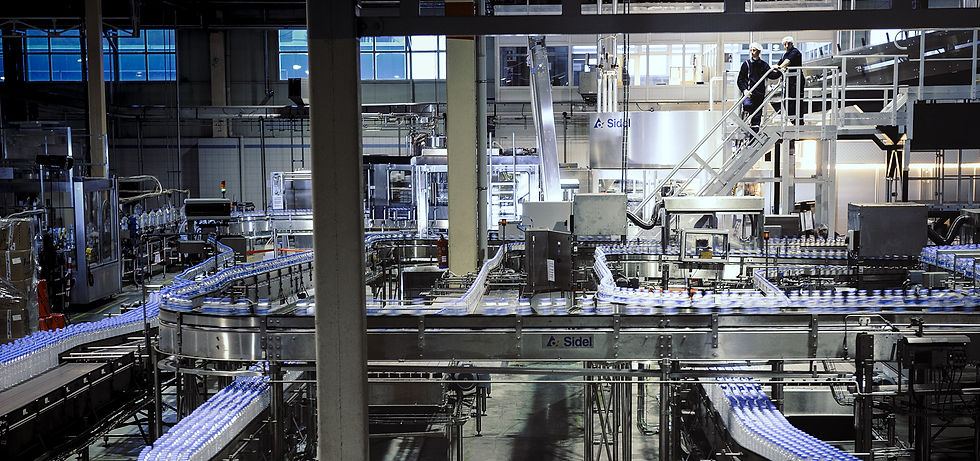
When you measure KPIs and productivity metrics, you have to consider and focus on specific factors affecting operational KPIs to achieve key business goals and objectives and stay competitive. These factors are:
1. The capability of real time information capturing and data collection;
2. Working with the right skills and regular training;
3. Quality of the machines and equipment;
4. Input materials and quality;
5. Time;
6. Floor area or space;
7. Power or energy;
7. Finance;
8. Movement of man and materials;
9. Production plan and forecast;
10. Measuring system for KPIs;
11. Right and valid data;
12. Leadership support;
13. Market.